Michigan MAC coaches welcome new eligibility model, navigating early effects
The trio of Michigan MAC coaches are happy with the rule as it addresses the NCAA's eroded eligibility rules, with one coach noting one hang up.
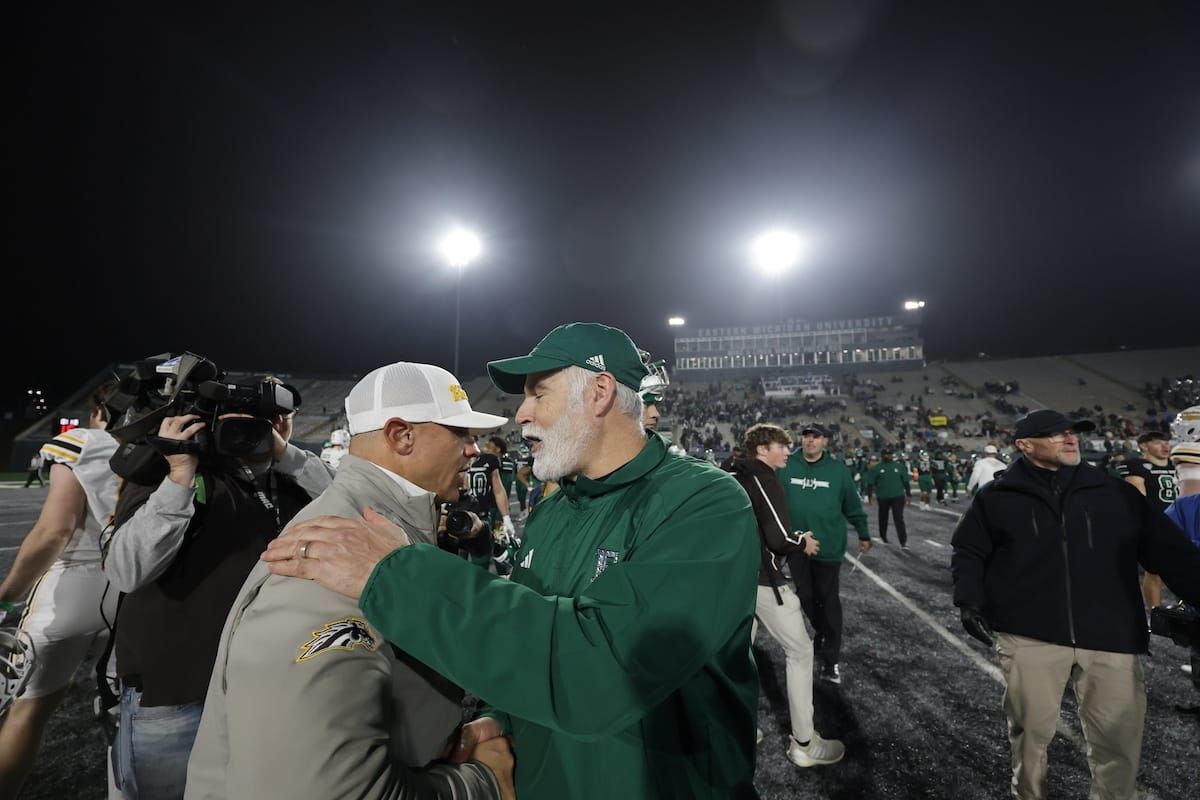
Detroit — The NCAA’s new eligibility model, by and large, is being welcomed by the trio of coaches leading Michigan’s MAC programs.
There will be hangups and hiccups with the implementation of the new rule, as transition and change are never without pitfalls. Change is never easy.
“I think initially it makes it tougher because there are, as you implement this new rule, there's never a perfect world or never perfect timing,” Western Michigan head coach Lance Taylor said to Mitten Football in June. “And those things, in terms of implementation and rollout, are very tricky.”
But on the whole, the Michigan MAC coaches are in favor of this new change and the NCAA trying to get its arms around eligibility rules being sued out of existence (TBD for the new model). The elimination of redshirts, streamlining of the eligibility model and presumably cutting down on the pathways for athletes to petition for extra years — a morass that quickly enveloped the NCAA under the old eligibility rules — are all steps in the right direction as far as Eastern Michigan’s Chris Creighton, Central Michigan’s Matt Drinkall, and Taylor are concerned.
“And so initially it creates a little bit of confusion or just working through some of that,” Taylor said. “But I think as we get two, three, five years down the road, it creates some clarity where now you take the waiver process out of whether a guy's going to have a sixth or seventh or eighth year of eligibility and all these things that we've seen since Covid. So I think it does give us some parameters and structure for how we want to operate and how we want to build a roster as we move forward.”
The new NCAA eligibility model replaces the old paradigm where an athlete had four seasons of eligibility, all to be completed within a five-year timespan. Now, athletes can just play five full seasons of college sports, with no redshirting to preserve a year of eligibility, and once the five year clock is up, they’re out of eligibility, no matter how many seasons an athlete did end up playing. And the eligibility timeline starts upon full-time college enrollment or the academic year after an athlete turns 19 (a carve out that particularly benefits college hockey.)
And largely it’s the elimination of redshirt decisions that makes life far simpler in terms of roster management and construction.
Instead of needing to game out redshirt plans and navigate who has how many years of eligibility in their back pocket because they did (or didn’t) take a redshirt year, it becomes a simple proposition: One has first, second, third, fourth and fifth-year players.
“It certainly makes it a lot easier to enforce, know what I mean?” Drinkall said. “Like, there's a problem now, 26 year old guys playing against 18 year old kids, and that's not how college athletics was designed. This is how it was before, but it's just — it's gonna be so nice that all the injuries and exceptions, and it's not just kind of up to your institution now, that there's gonna be a lot more uniformity across the board.”
The rule change does create at least one potential new tension in how rosters get shaped.
Teams can now effectively be a year older more readily without needing to redshirt players, as everyone has a fifth year automatically. That is something that will presumably benefit the likes of power conference schools that can pay players handsomely to stick around.
 Andrew Graham
But if the likes of Big Ten and SEC programs start putting a premium on building out older more experienced rosters through retention and transfers and get selective in taking high school recruits that can help sooner, rather than later, there’s an opportunity for MAC programs and other group of six programs to capitalize.
“If we're, you know, recruiting somebody who's getting recruited by a Power 4 school,” Creighton said, “to say, ‘Where do you think you're gonna get the opportunity to place sooner?’”
Drinkall, who coached offensive line at Army and won a Joe Moore Award there, expressed some trepidation about how the elimination of redshirts will change offensive line recruiting.
“For a lineman to be that big and heavy and strong enough to compete is unrealistic,” Drinkall said of freshmen. “So it's just, that demographic will suffer some.”
Offensive line is one of the handful of positions — or perhaps only — where a true freshman straight out of high school can’t or won’t see the field because there’s a level of physical development that hasn’t occurred. The few that can tend to be the exception to the rule, too.
So most offensive linemen need a year in a program to get bigger and stronger before seeing the field, and then if they play well early at a place like Central Michigan, the likes of the Big Ten and SEC come calling.
“The problem is the guys that Michigan and Michigan State are gonna get, that can play soon, come from us,” Drinkall said, referencing the broader trend of up transfers from the group of six to the power four. “They're not gonna come from high school. So we recruit them. We're just getting good to go play their best football somewhere else. That sucks. So they haven't worked that one out yet.”
The solution for the short term, then, might be something that the Chippewas have already done in signing veteran up transfers from the FCS, Division II and junior college levels to play on the offensive line.
Right now, of 21 offensive linemen on the roster, Central Michigan has six that at one point played at a lower level: Losini Maka (Georgetown), Nic DiSanto (Eastern Illinois), John Williams (College of San Mateo), John Iannuzzi (Columbia), Jacob Russell (Valparaiso) and Trevor Swan (Georgetown). Five of those six transferred to CMU after Drinkall arrived.
Eastern Michigan, also, has a spate of linemen who began their career at a lower level: Richardo Wourman (Wayne State), Nathan Henry (Drake), Guzzy Kayed (St. Francis (Pa.)), Chad Troxler (Bakersfield), Tyler Brumfield (Snow College by way of Oklahoma State) and Elijha Payne (Delaware State).
Whatever concerns there are about some of the blindspots in the new rules, there’s no doubt that having a clearer and consistent set of rules around eligibility going forward is something the Michigan MAC coaches are down with.
Creighton himself comes with a unique perspective as not just a coach but a parent of a college football player, as his son Luke begins his time at Northwood this fall.
“Obviously, whenever you make a change, there's people that are caught in the middle. But I think they're trying to do what's best for everybody,” Creighton said. “... And you know, my son’s starting college football right now, right? So it's — you think of it as a coach and as a fan or as a parent, it makes a lot of sense.”