Do new NCAA rules, federal court ruling mean CMU can add Jordan Kwiatkowski back to the roster? It’s complicated
Don't expect anything to happen anytime soon, either.
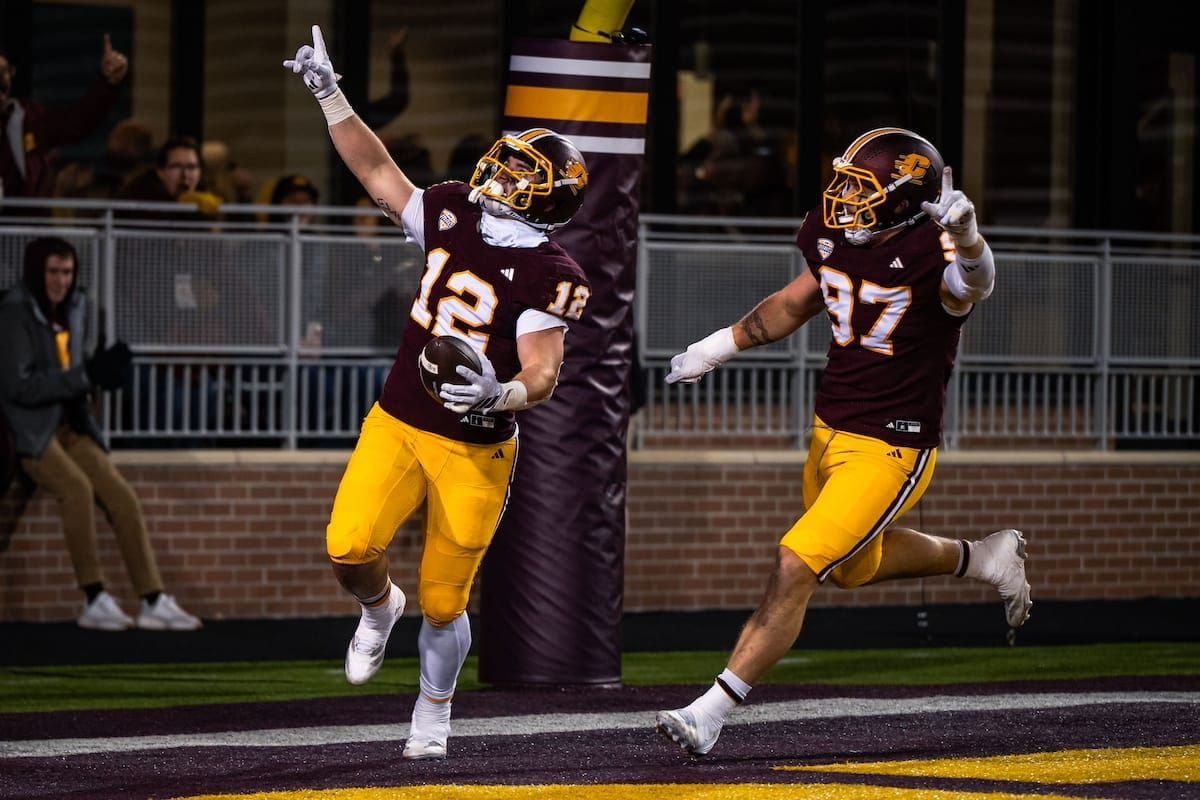
Mt. Pleasant — Could Jordan Kwiatkowski (and perhaps two others) suit up and play another season of football for Central Michigan this fall amidst new shifts to NCAA eligibility rules?
The short answer is yes, technically. The longer answer is far more complicated, and far from settled, either. Allow head coach Matt Drinkall to explain.
“Yeah — it applies to three of our guys who I'm not going to name,” Drinkall said at CMU’s football media day on Thursday, “but three of them. And they're still working through the logistics of it because it sounds like one of the big hangups is, if you're an athlete, you get done with swimming or gymnastics or tennis and there's no professional league for you to go sign and play in, you can now return back to college. But in sports that there are professional leagues in — football, both basketballs, men's, and women's — if they signed a contract, now they can't come back and do that.”
To recap, the NCAA recently enacted a new eligibility model that dictates athletes have five years in which they can play five seasons. Redshirts are a thing of the past. Then, as is the way the world works now, the NCAA got sued in federal court in Colorado by athletes who graduated high school in 2022, had played four years of college, but then didn’t get grandfathered into the policy.
The plaintiffs won, and now Class of 2022 high school graduates who played four college seasons without a redshirt from the 2022-23 season through 2025-26 — like Kwiatkowski — now have a year of eligibility. The NCAA is appealing the decision.
And more specifically, the ruling doesn’t enjoin NCAA transfer rules so unless the players who thought their eligibility had expired decided to enter the transfer portal before graduating, their only option is to return to the school they were most recently at.
While Drinkall didn’t name any of the three players, it’s easy to figure out that Kwiatkowski, who played from 2022-25 for CMU, fits those general parameters. Mitten Football’s friends over at By The Belt have done so already.
Another player from the 2025 roster who fits the criteria is Dylan Fisher, a defensive lineman who graduated from Toledo Catholic Central High School in 2022, played three seasons at Ohio Dominican from 2022-24 before transferring to the Chippewas for his then-final year in 2025.
The last one appears to be defensive lineman D.J. Bennett, who actually graduated high school in 2021 but apparently played in two seasons across three years to begin his career at Henderson State and then Louisburg College. Regardless of the specifics of his circumstance, Bennett is currently listed on the 2026 Central Michigan roster, indicating he’s cleared.
 Andrew Graham
Getting Kwiatkowski back, in particular, could be a boon for the Chippewas. He’s been all-MAC twice (2024, 2025) and finished with 14 tackles for loss while anchoring the middle of the defense at linebacker last season.
But there’s a complication for Kwiatkowski, the former all-MAC selection, as he signed deals both with the New England Patriots for minicamp and with the Hamilton Tiger-Cats in the CFL.
Because Kwiatkowski signed a professional deal, that theoretically sacrificed any potential future eligibility to play college sports. The ruling that provided the fifth year under the new NCAA policy didn’t enjoin other rules, like ones around professional contracts voiding eligibility.
But Kwiatkowski and similarly stationed athletes did so having thought they didn’t have any more eligibility to forgo.
And that is where Drinkall has a bone to pick with the way the rules are set at the moment.
“So right now, as far as I know from the compliance offices and all the messages, as far as I know as of today, right now, how the legislation reads, I don't understand how that would hold up. Like my child was in a sport where they just, like, you know, if you sign a free agent contract with an NFL team, you do that based on the idea that you're out of eligibility. No one would do that if you think you have additional eligibility remaining. So I think I'll be curious to see how and when they can legislate that, but that's above and beyond me.”
Other players, like Indiana’s Stephen Daley and Kellan Wyatt, have already rejoined their teams in the wake of the ruling in Colorado, though they did not sign pro contracts.
And as has been the case recently, there’s always a chance the legal and political change, and the rules along with them.
“The environment that's going on right now, which, based on legislation and judges, we find out every 15 minutes of the new rules,” Drinkall said.