Sunday reader: The NCAA keeps asking Congress to solve its problems
There's a reason no other American industries hand the future of their business model to 535 legislators.

There was much scuttlebutt this past week and weekend about college football and machinations around the federal government.
For one, the SCORE Act is coming back up for a House vote as soon as this week. While it might make it out of that chamber — though that is not a guarantee, if various Michigan elected officials are any sort of barometer — it’s unlikely to garner 60 votes to clear the Senate and head to the president to be signed into law.
Thus emerged another bill, this one coming out of the Senate, co-sponsored and authored by Republican Ted Cruz of Texas and Democrat Maria Cantwell of Washington. The bill also has support of the White House, which recently had its committee eyeing reform in college athletics release six recommendations — in effect, a blog post. College athletics leaders signed a letter supporting the new bill, save for the commissioners of the Big Ten and SEC, AKA the two men who will most sway where college athletics goes.
Big Ten commissioner Tony Petitti and SEC commissioner Greg Sankey both issued statements that basically said the leagues needed to review the language of the bill before offering support or critique.
CBS Sports had a good report on the new bill, with language of it expected to be unveiled this week or in the near future.
But I am personally skeptical that this bill, or really any measure of legislation at the federal level, gets across the finish line in the current congress or political environment, and for a few reasons.
For one, a basic consideration of the political economy shows how difficult getting legislation passed is.
The college sports business model is at the behest of 535 legislators who are each weighing several interests, including their own. All it takes is one deciding that this bill needs to be stopped for the works to be gummed up. Maybe they’re grandstanding for attention in our politics of oppositional defiant disorder, or maybe they have genuine principled opposition to a proposed law changing college sports. Either way, you’re giving too many people a way to pull the pin on the grenade.
Also in the minefield of “making your business congresses business,” it seems highly unlikely that congress will pass out an antitrust exemption to college athletics, not because of anything to do with college athletics, but because of the floodgates it could open.
The case for college sports to get an antitrust exemption is, at best, specious. It’s that they’ve always functioned this way, basically, which is far from a rock solid legal justification. Give special treatment to the NCAA, and every American industry under the sun will be knocking down the doors of congress to get their own carve out in U.S. labor law.
 Andrew Graham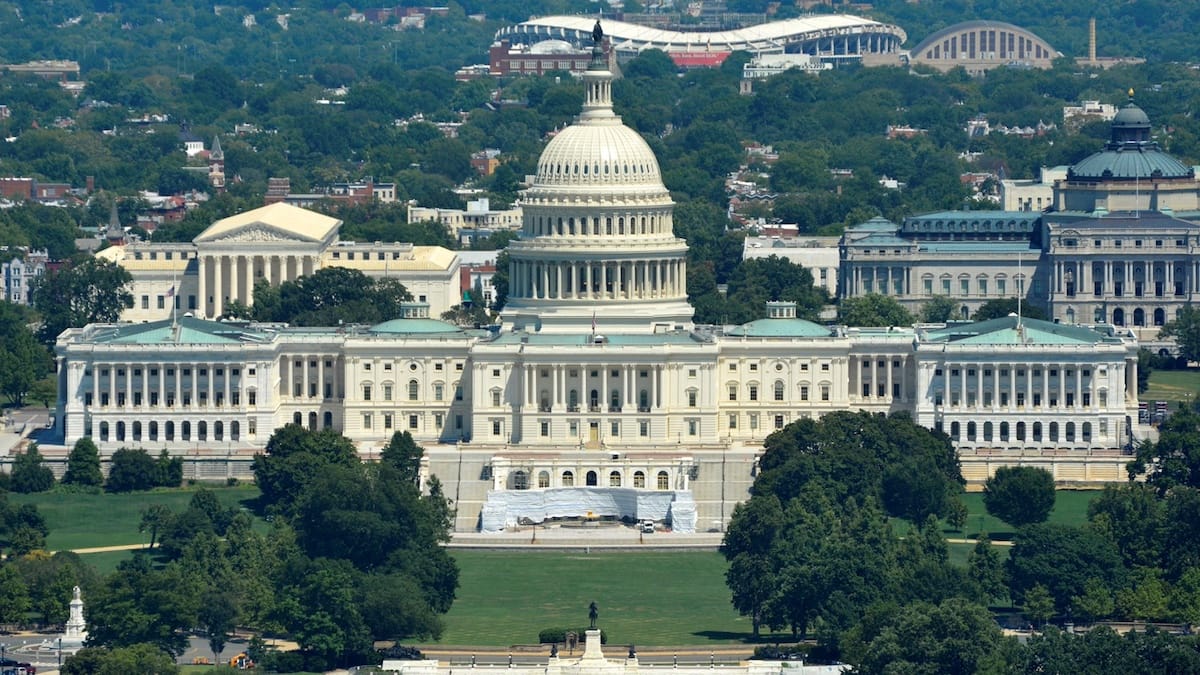
Plus, when considering the partisan nature of it all, this current White House supporting a bill seems just as likely, if not more likely, to create blanket opposition from Democrats in the minority than it is to engender a bipartisan wave of support. Cruz and Cantwell agreeing doesn’t mean the rest of their respective caucuses will fall in line.
Which brings up the bigger point here: American businesses, and certainly professional sports leagues, avoid Congress dictating terms of how they run their business to them at all costs.
It’s about maintaining control over what happens and keeping it about the matter at hand. Rather than truly vested and knowledgeable stakeholders having hard discussions, compromising and finding a new status quo, the future of college sports is now at the behest of 535 legislators of varying public mindedness and, frankly, intelligence.
It brings to mind a line from the television show The West Wing, where press secretary C.J. Cregg, in trying to find the right opponent for the Bartlet White House, decides on the House of Representatives.
“We need someone perceived by the American people to be irresponsible, untrustworthy, partisan, ambitious, and thirsty for the limelight. Am I crazy, or is this not a job for the U. S. House of Representatives?" Cregg, played by Alison Janney, asks.
Now, part of the reason that college sports leaders find themselves asking Congress, specifically, for help, is that the college sports business model, as they want to preserve it, is pretty roundly illegal — the Supreme Court tends to agree with that assessment, too.
To move forward with college athletics being a big-money enterprise, schools would either need to start complying with the Sherman Antitrust Act and various other federal laws the concept of “amateurism” helped them flout, or get special treatment from the government. They’re going for the latter, at least so far.
But the net result so far is that a lot of lobbyists have gotten paid, because billable hours always wins in college athletics.
And the NCAA is taking some action of its own, pursuing the five years to play five seasons model of eligibility.
That seems likely to come down and be made a rule, which originally came about via a White House executive order (which has about the weight and effect of yelling out of a window as far as you and I are concerned). But it is likely to become at least an NCAA rule, though not federal law.
And NCAA laws regarding eligibility have, largely, not fared well in court. That’s because U.S. labor law prevents collusion between employers to curtail things like employee salary or better working conditions. And in the eyes of the law, the NCAA is basically an institutional body via which the schools colluded to not pay athletes, among other things.
It’s not hard to imagine this rule ends up being challenged and scuttled by a judge, as many of the NCAA dictums on eligibility have in recent years.
And the White House can release as many “Nick Saban suggests this” executive summaries as it wants, but if the two most powerful people in college athletics — Petitti and Sankey — are mum on the soon-to-be-revealed bill that supposedly will supposedly be the one to fix college sports, it’s probably not something we need to pay too much attention to.