Q&A: Detroit native Shawn Smith on Super Bowl officiating assignment, coming up as ref
Smith spoke with Mitten Football about his Super Bowl assignment, his pathway in the profession and his full-time job with Blue Cross Blue Shield of Michigan.
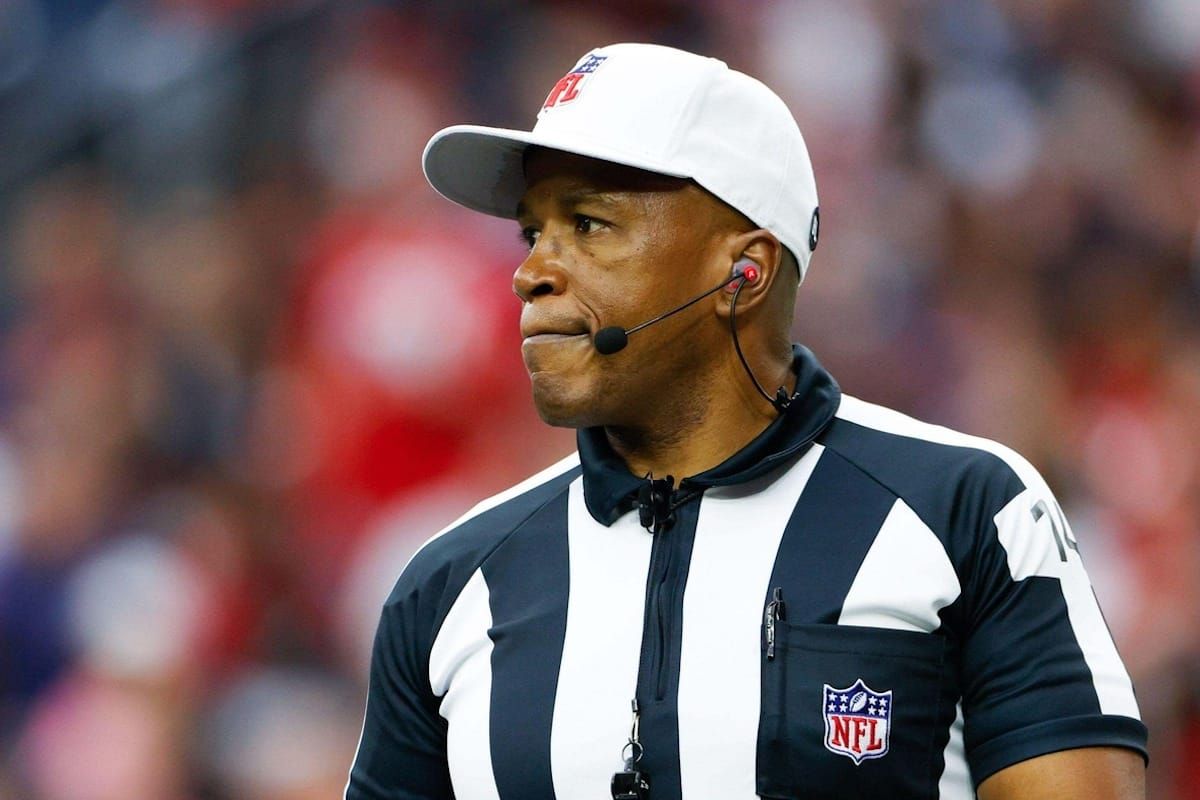
Shawn Smith reached the pinnacle of his work as an NFL official earlier this year, tabbed by the league as the crew chief for the Super Bowl.
It was a Super Bowl debut for Smith, a Detroit native and Cody High School alum who is currently a labor relations manager at Blue Cross Blue Shield of Michigan. Smith, who attended both Eastern Michigan and Ferris State, has served as an NFL official for just over a decade.
Smith spoke recently with Mitten Football about his Super Bowl experience, what goes into it behind the scenes, his pathway through the officiating profession, and how his professional life fits in.
The following Q&A is from that conversation, and has been lightly edited for brevity and clarity.
Andrew Graham: I'll start with the Super Bowl. How does one find out about that assignment, as an NFL official?
Shawn Smith: Well it's — for one, I guess I can start with: We're evaluated based on every play of every game. And then we receive our grades after that game. And then that's compiled over the season and then at the end of the year, everyone is ranked. Based on just how things are, typically your top ranked officials get the highest game, which could be the Super Bowl. So, you don't necessarily know where you rank but you kind of have an idea of if you're having a good season or not, so to speak. But you don't necessarily know that. So when the end of the year comes, you're hoping to get a postseason assignment and if you're working in the first weekend typically you're probably out of the Super Bowl running, which is the wildcard weekend. But if you're working that divisional round, typically in years past, the Super Bowl officials come out of that divisional round. Not getting the call that first weekend, it's like, 'Alright, I'm in the running.' Or, 'I'm not in the running.' So, for me, I knew I was in the running when I didn't get a call that first weekend.
A.G.: Do postseason assignments come down the same way from the league office?
S.S.: Yeah, yep. So during the postseason, we don't find out any earlier. We find out Monday of the week of the game. So as soon as the regular season ends, the officials working that wildcard weekend, they find out that Monday. The officials that are working divisional round, they find out after the wildcard round is done and so forth. That's kind of how it works out. So for the divisional round, get a phone call, say 'Hey, here's your crew, this is the game that you have.' And you go out and work that game.
A.G.: So, what was the moment like when you get the call that you're crew chief for the Super Bowl? Presumably exciting?
S.S.: Oh, yeah. So I worked the divisional round and we had a game, pretty uneventful game. So then it's — and the reason I'm telling you this story is it can change, like last year I worked the divisional round and then that following Monday, I got the assignment for, I was the alternate on a championship game. So after you work that divisional round, then there's that Monday. If you're working the Super Bowl, you're kind of hoping you don't get a call on that Monday, which I didn't get a call. Then that Tuesday, that's when the calls go out. So then that Tuesday, you're kind of on pins and needles, knowing that the opportunity may happen. You may get phone calls. So you're just waiting around, making sure that you've got your phone near you at all times and then, yeah, you get the call and it's kind of surreal to receive that. Something that you've worked hard for and been wanting to be a part of and to have that moment. And when it hits you, it was overwhelming. It was — I can tell you it was more than I thought it would be. Just a special moment, just receiving that phone call.
A.G.: How fast does excitement flip to getting serious about the assignment?
S.S.: It flips pretty fast because there's a lot of things that happen behind the scenes. For me, this was my first time so I thought I knew what to expect and it was way more than what I thought. You know, you kind of want to share the news with your family but it's not public and you know some of the people that are close to you want to share it but you want to tell them, 'Hey, don't share it. It's not public so just keep it to yourselves.' But then once the information went public and all the articles started publishing it and then it just, went, as they say, viral and just created a whole storm of attention that you weren't necessarily prepared for. But you're trying to address all the congratulatory messages that you're receiving. The phone calls and the text messages, the emails and all of those things from people that are seeing it on the, that are seeing the information's that out there. But then you want to make sure that you get to the people that helped you along the way. Some of your mentors that played a significant part in your journey. You wanna make sure you get to those people so it's a lot of work.
And then, for me, I didn't want to leave anyone out. I didn't want to miss any phone calls or not tell any people. Going all the way back to my high school coach. It was important for me to go back and reach out to him and have that conversation and tell him that I got it. Because it means a lot to a lot of folks that play a role in your journey and had something to do with you being an athlete or your being an official or whatever capacity that it was special for me to be able to share that news with them.
A.G.: Absolutely.
S.S.: But once you get through all of that, then it's the whole logistical thing of, 'Alright, so you've got family, you've got tickets, who are you going to bring from your family? Who wants to go? Who's not going to go?' So you want to hurry up and get those things squared away before the teams are decided, because that call comes out, we get that call before the championship games. That call is made on the Tuesday before the championship games, so I wanted to get all those things buttoned up as far as who was going and tickets and airfare and things like that done that Friday before the championship games. Because that can dictate, that can have another impact, because once those teams are decided, that's a whole 'nother side. So that was kind of my goal, getting through that Friday, just getting all my logistics as far who was going, how many tickets I was going to need and all of those things.
A.G.: I can only imagine the logistical challenges you took on. Once you get to the game week, is that process different than a usual game?
S.S.: For the Super Bowl and even for our international games, we treat those a little bit different. We go out a few days before. We get there typically the Thursday before the game to get acclimated to the city. There's some dinners, some luncheons that we have that we're a part of. So our union typically takes us out for dinner, the league takes out the entire family for all the officials and the alternate officials and your family, so you get a chance to celebrate the moment with your family and with the league and things of that nature. You do that one night and then like I said there's a luncheon, also the opportunity to, the union will take you out another night. And then there's the rehearsal that you go through on the Friday, as far as the coin toss rehearsal that you'll walk through, media interviews that you'll go through on that Friday. So you kind of go through those things.
And Saturday you kind of get back into the routine of just your game preparation. So we have our, what we call our pregame meeting where we're going through just our scouting, administrative things for a typical game, which is what we do for all of our games, but we have that meeting on Saturday. And then you do that in the morning and then you just want to spend some time away from football, just relax. But, you know, getting ready for the game. Because you're in the midst of all the excitement you're seeing. Your family's out there and they're having a good time and they're seeing the who's who of football and everybody's out there, everyone's excited. And you're just taking it all in knowing that you have this game that's happening the next day. It's a moment, I would say.
A.G.: Get away from football, and you get to be in California in early February — not a bad getaway from Michigan winter.
S.S.: Exactly. You're just walking around. We were out there, we were in a Waymo car, we got stuck in a Waymo, things like that. You're just like, 'Man.' But yeah, it was a crazy experience, but everyone had a really good time. And it's cool to be able to let others celebrate that moment. Like folks who had never been, in my family, to a Super Bowl, to see what that really means and feels and looks like from that perspective. Just being in the Super Bowl city during that time was a cool experience for me.
A.G.: How many family and friends came out for the game?
S.S.: So I ended up needing 12 tickets. I ended up using 12 tickets.
A.G.: Any moments or memories that stand out from Super Bowl Sunday?
S.S.: Yeah, that Sunday, just being on the field with some of the people that were there, seeing these hall of famers, these folks that you grew up watching as a kid and just cheering on and being a fan of the game and now you're in that moment and now some of these folks are the honorary captains and you're having casual conversations with them and sharing stories with mutuals that you guys have. Like for example, I work with a guy and he was a teammate of Joe Montana. And he'd share stories with me, back when him and Joe were in college. So being able to share those moments, being able to pass that along or just having, wanting to take a selfie with you on the middle of the field. I think that was the biggest surprise, is like having a Lynn Swann pull out his cellphone camera and say 'Hey, man, can we take a selfie?' And I'm like, 'You're Lynn Swann.'
A.G.: A 'Who, me?' moment.
S.S.: Exactly. Just going through that whole spiel or even down to the coin toss, with the commemorative coin that was from the 1700s and this coin is going to the Smithsonian and flipping this coin and that whole moment that you really, you can't appreciate while you're in it but as time goes, it's like 'Man, that was a special, special day. Special occasion.' And it was unlike any other. Because we were celebrating the 250th year of the United States and it was just something special to commemorate the moment.
A.G.: Getting to step back and realize you're a figure in a historic moment is pretty cool. Do you appreciate that more with some time passing?
S.S.: It's like 'Man, that was —' And for me, I'm like, 'Alright, lets get this game going,' I'm ready to get the game started because once the game starts, it's just another game. But everything leading up to it is like, 'Yeah, this isn't another game.' Like our typical schedule that we have on Sundays, it's not the same schedule that we have on the Super Bowl. Everything's kind of moved up because there's other things that need to happen. So the schedule's a little bit off so your routine is off a little bit, but you're still in the moment. And at the end of the day, it's still a football game. But, getting to that football game, getting to that opening kickoff is something totally different.
A.G.: You're a Detroit native, correct?
S.S.: Correct, born and raised in Detroit.
A.G.: Also played sports growing up, into college?
S.S.: Yep. I was a fairly decent athlete, a two sport athlete in high school and I played a year of football in college and I ran track a few years in college. Sports was a big part of my youth and growing up. And I never thought I that I would've been an official. Even in my, that would've been something that I wouldn't have took as serious as I do, even in my early 20s, mid 20s. Even when I got into it in my late 20s, I didn't see myself as that. Because I just didn't have any line of sight to what that really meant, what it entailed and the enjoyment that I would get from being a part of the game and officiating. I just never looked at it that way.
A.G.: How did you get into officiating, specifically? Like you said, it's not a pathway many consider.
S.S.: You don't think about it. I might've messed around and officiated a game. Sometimes you're growing up, 'Hey, we don't have any refs.'
A.G.: Basically 'Can you work a whistle?'
S.S.: Yeah, give you a whistle and you kind of don't think about it. Then you get to college and then you need some money and it's like, 'Hey, there's intramurals.' And you're like, 'Well, yeah I did referee a game when we needed a referee.' So then you're like, 'Hey, alright, I'll referee.' So then you start doing the intramurals and then you're like, now I realize how bad I was, but I was like, 'Alright, this is cool.' Then you kind of get out of that and you don't look at it again. And then there was probably about four, five years after I graduated school, I was playing in a rec ball league, basketball, and just talking to the refs and saying 'Hey, I used to referee.' And the guy was like, 'Why don't you get back into it.' And I was like, 'Well, I don't know. That might be a good idea.' I was looking for some supplemental income and things of that nature. So he introduced me to it and kind of got me to get registered with the state so then I did it and I went out and started working a little bit and I took a liking to it.
I was like, 'Hey, you know what, this is cool.' I'm involved in the sport, I can still have my professional career, I can make some extra money and I'm kind of getting the best of both worlds. I'm not — because I did at one point in time want to be a coach, but coaching required me to commit a bunch of time that I didn't necessarily have with two young kids at the time. But officiating allowed me to have that balance. Still being a part of the game, in some capacity, and then still having my professional career. So that's kind of how I got into it. But even at that point, it was like, 'Alright, I'll just do Pop Warner stuff, maybe I'll get to some high school' and just become a high school official. But never, the goal when I signed up was to go to the NFL.
A.G.: You mentioned realizing you weren't the best ref early on. Any notorious blown calls from your early tenure?
S.S.: I remember I was reffing a game between, this was at Eastern Michigan but it was between, it was a fraternity game between the Kappas and the Qs, and I remember blowing and calling a foul and giving the and-1, and then said they had a 1-and-1 opportunity at the free throw line, which you totally can't do. You either have a 1-and-1 or you count it and you got the one free throw.
A.G.: Created your own four-point play.
S.S.: Right, created my own four-point play and the guys were screaming like 'He can't do that.' It was just going crazy. So in hindsight, man, I didn't have a clue. But what's interesting about it is I really liked basketball more so than football. I took a liking to basketball and thought I would progress in that. But when I realized how much of a weekly commitment that basketball required, football supported my in that capacity of trying to grow. Because football was more so a weekend game unlike basketball, where it's a bunch of weekday games.
A.G.: Football can be more of a real side gig.
S.S.: Yeah, exactly. Exactly. But man that was kind of, as I started to move up and had to make a choice, it was like, 'I'll got the football route.' Because I can plan around it, it's on weekends, it's not me traveling somewhere Monday night, Tuesday night, Wednesday night, things of that nature.
A.G.: How does one move up the ranks in officiating? Do you apply for openings?
S.S.: It's almost like what we do in the professional ranks but it's more so like if you look at it in the sports world. So, in the sports world, you see coaches and they go out and they scout college kids and the professional leagues scout the college kids and that's kind of how they ascend to the top. So it's kind of like that in officiating. You go and you worked high school and we had meetings for those who were interested, we had college football meetings for those who were interested in college football. And you attend those meetings and you start to network. And then in the football space, there's what we call camps and clinics, so there are like trainings that go on across the country or whatever. So you would go to those and just try to hone your skills, get a little bit better. So during the offseason you'd go to different camps and clinics and you would meet some NFL officials or high ranking college officials and they would just help you improve your game and get better. So those are the things that you would do.
S.S.: But at the same time, you're building this network of mentors, mentees and things of that nature. But you asked the question as far as just applying, they basically scout you and recruit you to those leagues. You can apply, but if they want you, it's more so them wanting to come after you as opposed to you trying to say 'Hey, I'm going to submit my application to the NFL where you'll hire me.' No, it's more so NFL guys scouted you at a high school game, they saw you at a high school and they put you on a list. And next thing you know you're in college and you don't know that all these things are working behind the scenes. But it was all because someone that you didn't know was at your high school game scouting you and saw you work.
A.G.: That's fascinating.
S.S.: So that's how it works for a lot of refs.
A.G.: Makes sense the NFL self-selects, too.
S.S.: They have scouts that go out, scout high school games. They have guys that go out and scout college games at the various levels. So whether it's D3, D2, D1, now they have a development program so once you're in that final stage, they kind of put you in the program and you're paid closer attention to at that point, where they're really starting to vet you out and get a chance to work some of the college all-star games where they're really, you're kind of one of the finalists at that point. But, for me, I was getting scouted to the NFL when we still flew out to New York and interviewed. So for me, they reached out to me and I still remember the phone call, I was coming back from my son's fifth grade basketball game and I got a phone call saying 'Hey, we want to bring you in for an interview to the NFL.' And it was like, 'Wow.'
They sent me the application, I applied, flew me out to New York, I went there, had two days of interviews with I wanna say about 15, 16 candidates and you go meet for an hour and it was an interview panel of about eight people in there who were like, some were supervisors, coordinators of the officiating department. But they basically interviewed you, just asked you information about your professional career and your officiating career. So you would provide a professional resume as well as an officiating resume and that was basically how they did it back then. They don't do that anymore, as far as flying folks in. But when I was being scouted and interviewed, that was still part of the process.
A.G.: You work for Blue Cross Blue Shield of Michigan, too. What's been your professional pathway alongside officiating?
S.S.: I have an accounting degree, so I've always been in that audit space. I've done a lot of audit work. I've worked in several industries, whether it's manufacturing, financial services, utilities, energy and utilities, healthcare. So I've always been in that space. And what's interesting about the two professions that I have, they're kind of in parallel. Both, I'm guardian of the rules. We're making sure the policies and procedures are being followed whether it's in the corporate space or on the football field. So there's a lot of similarities there. And fortunate for me, I've been able to use some of the skills sets that I've learned on the professional side to help me in the football space and vice versa.
So some tactics, whether it's writing an audit report, when I was an auditor, and the owner of the process not agreeing but working with them to have an agreement on how are we going to write the report and what's included in the report or with me working with a coach who doesn't necessarily agree with a call that we made and maintaining that professional relationship with that coach and being able to articulate that with the coaches. So those two kind of went parallel. I'm no longer in audit, but majority of my professional career I've spent in auditing. Now I'm in a different capacity, I'm a manager in labor relations, so it's in the relationship space, so it's nurturing and working different unions in different capacity on the relationship. But it does help with my experience, from on the football field.
A.G.: Auditing the business world and auditing football games on Sunday on our TVs.
Yeah. Exactly. One you've got a flag and one you don't. But hey, you're not the most liked person in either space, nobody wants to see you, but it's par for the course.
A.G.: Thank you for the time, Shawn.
S.S.: Thank you.