Chris O’Leary brought the juice that's fueled Western Michigan’s stalwart defense
O'Leary has led a massive turnaround for the Western Michigan defense, and his secret sauce has nothing to do with scheme or skill.
Kalamazoo — Mustafi Al-Garawi still remembers his introduction to Chris O’Leary.
The defensive lineman sat at Campus Roadhouse across Stadium Drive from Waldo Stadium, on a visit as a transfer from East Tennessee State in May. Some veteran players had been showing him around and they’d stopped to eat when O’Leary came to introduce himself. And he arrived drenched in sweat.
That’s because O’Leary and the defensive staff had just done a group fitness rite, doing a Murph, a workout named after late Navy Seal Mike Murphy that consists of a mile run followed by 100 pull-ups, 200 push-ups, 300 squats, and then another mile run. It’s traditionally done while wearing a 20-pound weighted vest.
“Before I met him, I was told, ‘High energy guy, same guy every day.’ I’m like, ‘OK, sure, sounds right, sounds cool,’” Al-Garawi said, remembering the introduction. “I meet him, I’m at the restaurant here across from campus, and he walks in like he just got done running a 5K.”
Al-Garawi continued: “He walks in, high energy, bald, sweaty head, young guy, I’m like, ‘Holy crap, this guy just got done doing a marathon.’ That was my first impression of him.”
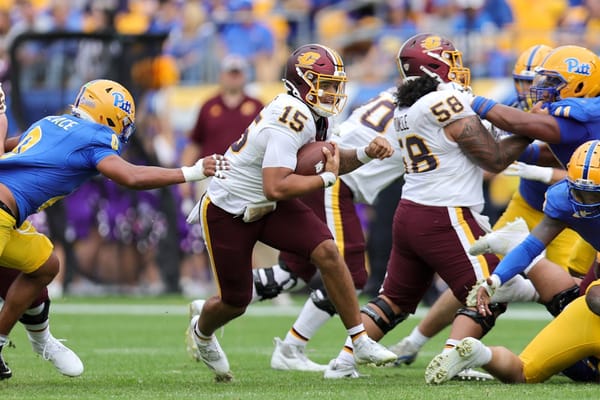
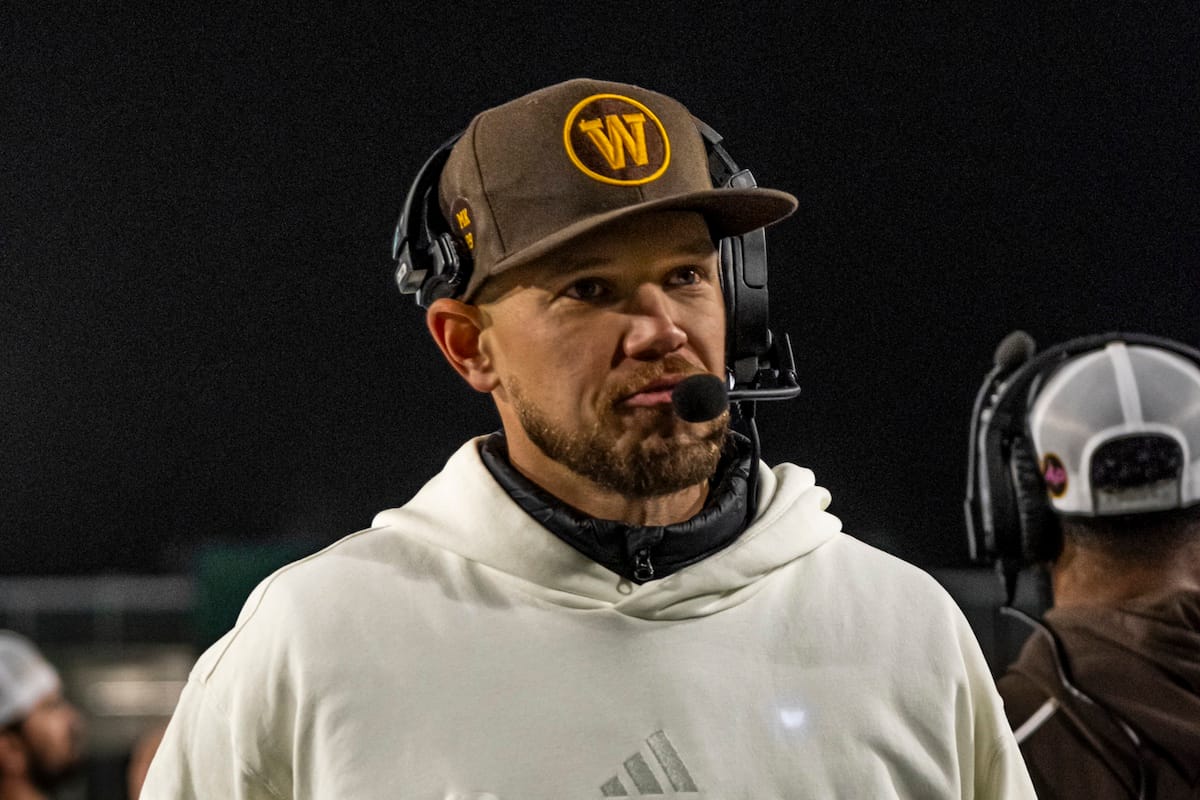
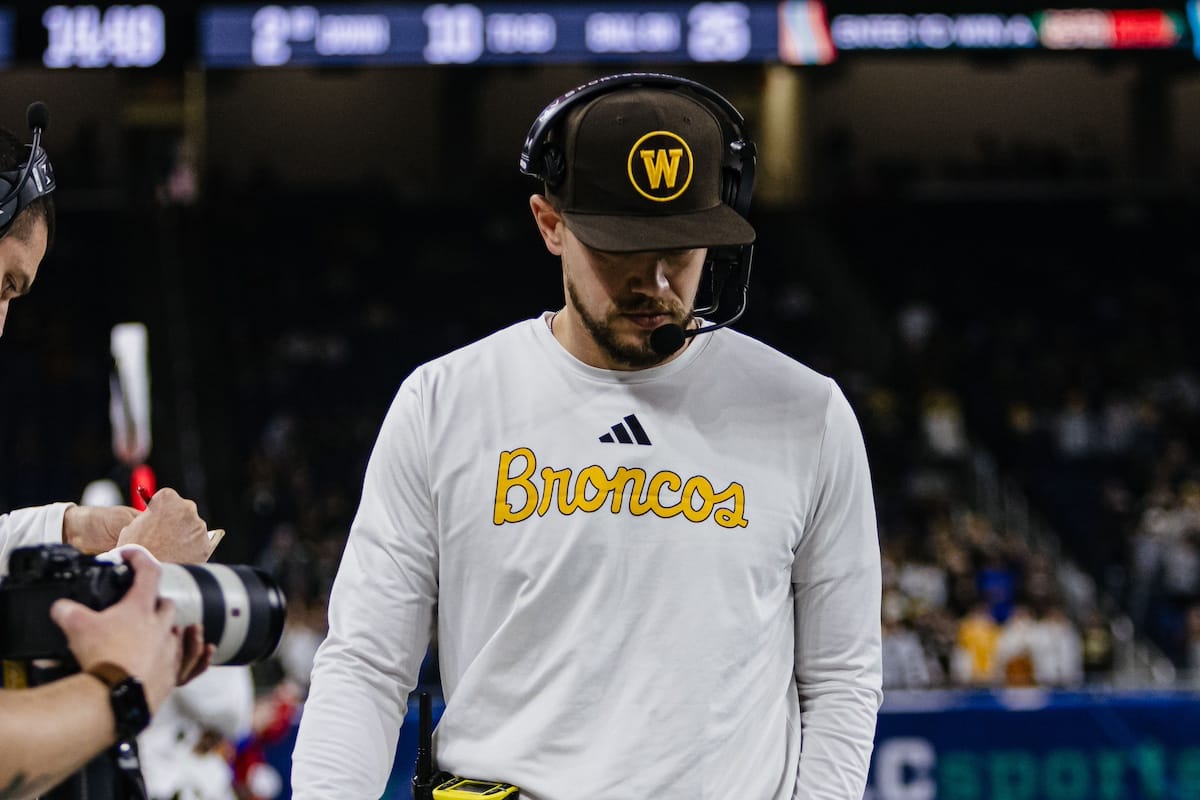
That’s O’Leary. A “psycho,” as head coach Lance Taylor put it, in the best of senses. Certainly the case as far as Western Michigan’s (9-4, 7-1 MAC) defense is concerned. Hired this offseason off the Los Angeles Chargers staff to serve as defensive coordinator in Kalamazoo, O’Leary sparked a major defensive turnaround, one that saw the Broncos finish the regular season ranked No. 15 nationally in total defense and help lead a MAC title-winning team that will face Kennesaw State in the Myrtle Beach Bowl on Friday at 11 a.m.
And O’Leary, 32, marshaled his defense the only way he knows: With relentless, youthful energy that endeared him to players, and a dedication to teaching, down to the finest detail.
“I think at the end of the day, even when I'm not feeling energetic or passionate, I try to force myself to be because of the gratitude I have for the position I'm in,” O’Leary said. “And so it takes my best every day. And my best is energetic and loud and all that. So I have to be that every day for the players.”
Asking those who know about O’Leary — bosses current and former, or his players — and one thing is thoroughly apparent: He is a ball of energy.
O’Leary suspects that he’s always been this way by nature to an extent, growing up around Terre Haute, Indiana, and playing a litany of sports. He also knew from a young age that he’d like to try his hand at coaching, though wasn’t entirely sure how that would happen.
He played quarterback in high school before moving to receiver in college, and O’Leary recalled one of his early lessons in the value of approaching situations with energy and confidence, coming into games late as a true freshman quarterback in mop up time. Sheepishly stammering out a play call wasn’t going to cut it, and he knew it.
So, even though he wasn’t really that confident in commanding a group of players older than him, O’Leary put on a brave face and acted the part.
“Just going in and having to echo the play call and, and not look nervous, you know?” O’Leary said, recalling that moment. “And I think that's the first step, is just taking it serious, taking yourself serious, doing what you think a leader should do, and then over time you kind of learn through trial and error what works for you.”
O’Leary stayed close to home for college, attending local Indiana State and playing for Trent Miles, who goes way back with the O’Leary family, well before Chris. Miles was part of the funeral service for O’Leary’s great grandfather.
“He comes from a family that is ‘it.’” Miles, who is now an analyst at Notre Dame, said. “... He comes from a great background, so I can’t rave enough about that. He comes by it honestly.”
And Miles saw in O’Leary what his high school coach, Chris Barrett, also saw: Someone smart and cut out for coaching.
“Once I found out he wanted to be a coach, I wasn't surprised,” Barrett said.
Not knowing whether or not O’Leary wanted to get into coaching, Miles started to put the bug in his ear. And when his playing career ended, O’Leary had a graduate assistant role on Miles’ staff waiting. Both described it as an easy and natural transition.
The first job for the former quarterback and receiver? Coaching the defensive line at Indiana State.
And like the freshman quarterback commanding a varsity huddle, O’Leary swallowed his pride, recognized he didn’t have the knowledge base of a veteran defensive line coach, and found a way to be an impactful coach, showing up with his infectious energy and a dedication to teaching down to the most granular details.
From his freshman baptism by fire to coaching a foreign position in his first role, O’Leary internalized a lesson that’s fueled his ascent since: He doesn’t always have to know the most or bring the best scheme, but can get elite levels of play by building trust and confidence in his players, amongst themselves and with him.
“You realize that you really are not important,” O’Leary said. “And so you gotta come to grips with that, which strips away a lot of that ego. Then it's really a matter of like, how far are you willing to go or what are you willing to do to become a master of what you're coaching and teaching? And that's what it took for me. I realized I had to spend more time studying the notes that we took in the staff meeting that day, or I had to spend time that night prepping for the next morning of the D line meeting because I didn’t — it wasn't natural. So I think for me it was a humbling experience and it really forced me to chisel out my work ethic in the profession.”
And he only knows one way to do that, attacking the days with what his boss in Los Angeles would deem “an enthusiasm unknown to mankind.”
And never was O’Leary’s enthusiasm more undeniable than when he joined a number of Western Michigan players during a summer conditioning session, doing the workout with them on the Waldo Stadium turf.
It’s something players said they haven’t seen before, a coach fully participating in a conditioning workout.
It left a stark impression.
“We started off by doing team conditioning, team runs on Friday nights,” Al-Garawi said. “And he was one of the only coaches that was running with us. He was hand in the dirt, next to all the players, doing suicides with us. That’s unheard of.”
“I’m like ‘Dang, man!’” defensive back Jarvarius Sims said, recalling the moment. “It’s not like he was just out there lollygagging around. He was sprinting, putting the work in.”
For all that is innate about O’Leary’s boundless energy, he is conscious about it. There are days when the alarm clock jolts him awake and he knows he might have to put on a bit of a mask and not back down.
“You can look at it as hard or it's just the price you pay for an unbelievable job and the relationships that I've built through the profession and all that,” O’Leary said. “And so, um, it's like we tell the players to be their best when they come here. We gotta do the same thing.”
Not just his players have noticed the energy that O’Leary brings. When Steve Englehart, who hired O’Leary on staff while the head coach at Florida Tech, thinks of his former assistant, he thinks of special teams meetings.
“I think about him sitting there in the special teams meeting room and, you know, at the end of that meeting breaking out with the team as loud as anybody and having that energy and running outta the meeting room to get ready for practice,” said Englehart, now the head coach at Presbytarian. “That's just one thing that I remember. I just waited for it at the end of every special teams meeting, I just waited for Chris O'Leary to kind of bring that juice to the special teams.”
Along with his Energizer Bunny nature, O’Leary’s youth has endeared him to his players. He’s only 10 years older than some of the older players on the roster. He listens to similar music, grew up with similar movies and television, and is a generally relatable figure. He knows what it’s like to grow up with a smart phone.
He is, as several players said, a players coach through and through.
He gets it, and getting it means that O’Leary can demand a lot of his players.
“I know he’s going to have my back, he’s going to have the team’s back, the defense’s back every single day,” Sims said. “So you kind of just want to pay him back with that same type of thing. You’d do anything for a coach like that.”
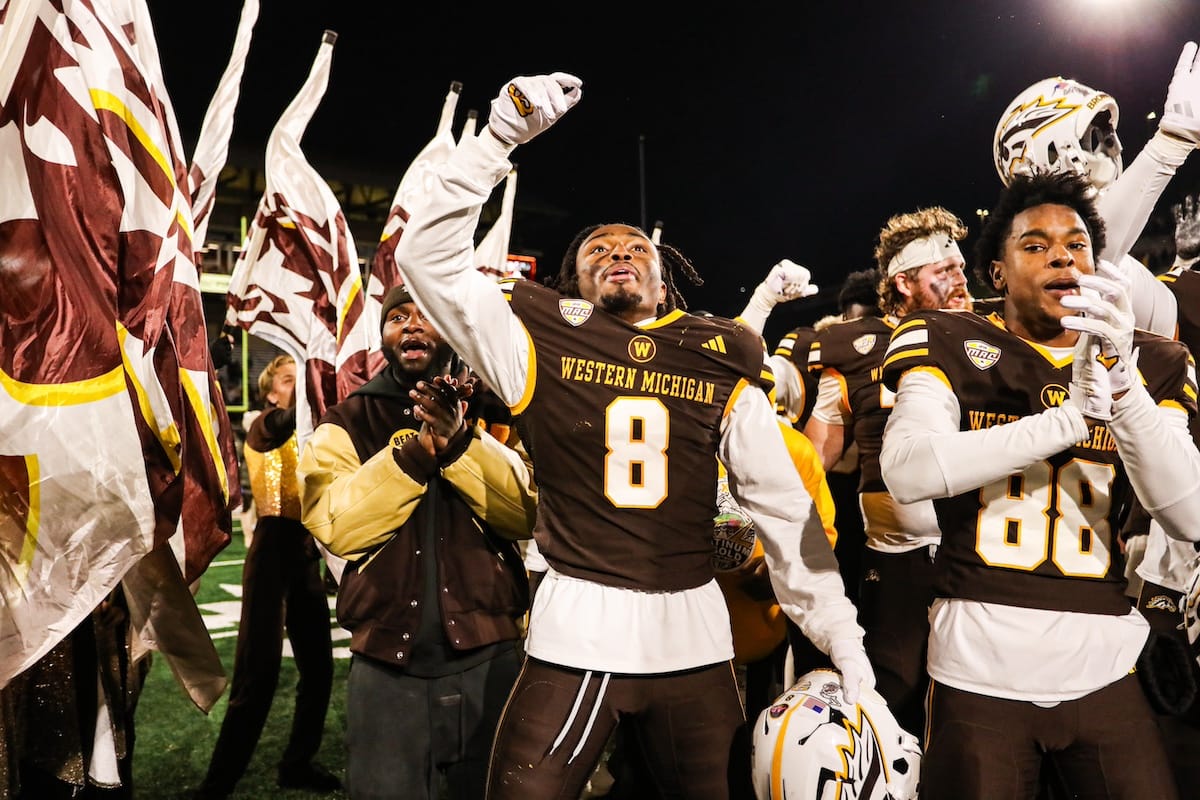
In practices, his energy manifests in O’Leary demanding excellence from his unit.
The expectation is the offense will not score. If a play isn’t repped right, it won’t be casually dismissed and earmarked for film review. The defense lines back up and will run it again until it’s executed to O’Leary’s standard.
O’Leary leaves “no page unturned” in teaching the scheme, too, Al-Garawi said, not only keying players into their jobs and roles, but how that fits within their unit's assignment and within the broader defense. That’s by design. Players who know and execute their assignment and also understand and feel the other 21 people moving around them can play fast and physical.
And watching WMU’s defense this year, they’ve played fast and physical, two things Taylor has wanted this team to be.
In O’Leary, he landed a defensive coordinator who has delivered on what Taylor hoped to bring in.
“I love him. He just brings great energy every single day. The guy never has a bad day. He builds great relationships,” Taylor said.
He recalled sitting in on a defensive meeting that stood out.
“He finds different ways to connect and bring a point home and making sure every guy in the room understands what we’re teaching, what we want, what the expectation is,” Taylor said. “And I think to be a great coach, you have to be a great teacher and communicator.”
Ultimately, O’Leary is starting to do for a new crop of up and coming coaches and players what his own did for him, setting him up for success in the present and future. Big-name coaches like Rick and Jesse Minter were there early in his career at Indiana State, both as a player and coach, and then at Georgia State as a coach. He spent years at Notre Dame — where he first crossed paths with Taylor — coaching under Brian Kelly and then Marcus Freeman. And in 2024, O’Leary coached safeties for the Chargers, working again for Jesse Minter and now Jim Harbaugh.
And that’s not to mention the likes of Miles, Englehart, Barrett and countless others who all played a part. O’Leary’s had no shortage of coaches pouring themselves into him.
Now, he’s pouring himself into this Western Michigan team, because it’s the only way he knows to coach.
“That’s how we ran our program,” Miles said. “That’s how he’s always been. And it’s always been a good fit and he’s with great people that help him do that. And it’s always been part of his personality to bring the juice. And if you don’t feel it, fake it. That’s how he and the mentors and everyone else that he’s been associated with starting from a young age has been, you better bring the juice. And it comes naturally to him. It’s one of his qualities.”