At Michigan pro day, Ernest Hausmann shares more on bipolar diagnosis, November absence
Hausmann first shared the story of his abrupt departure from the Wolverines last fall with Sports Illustrated in a tell-all interview.
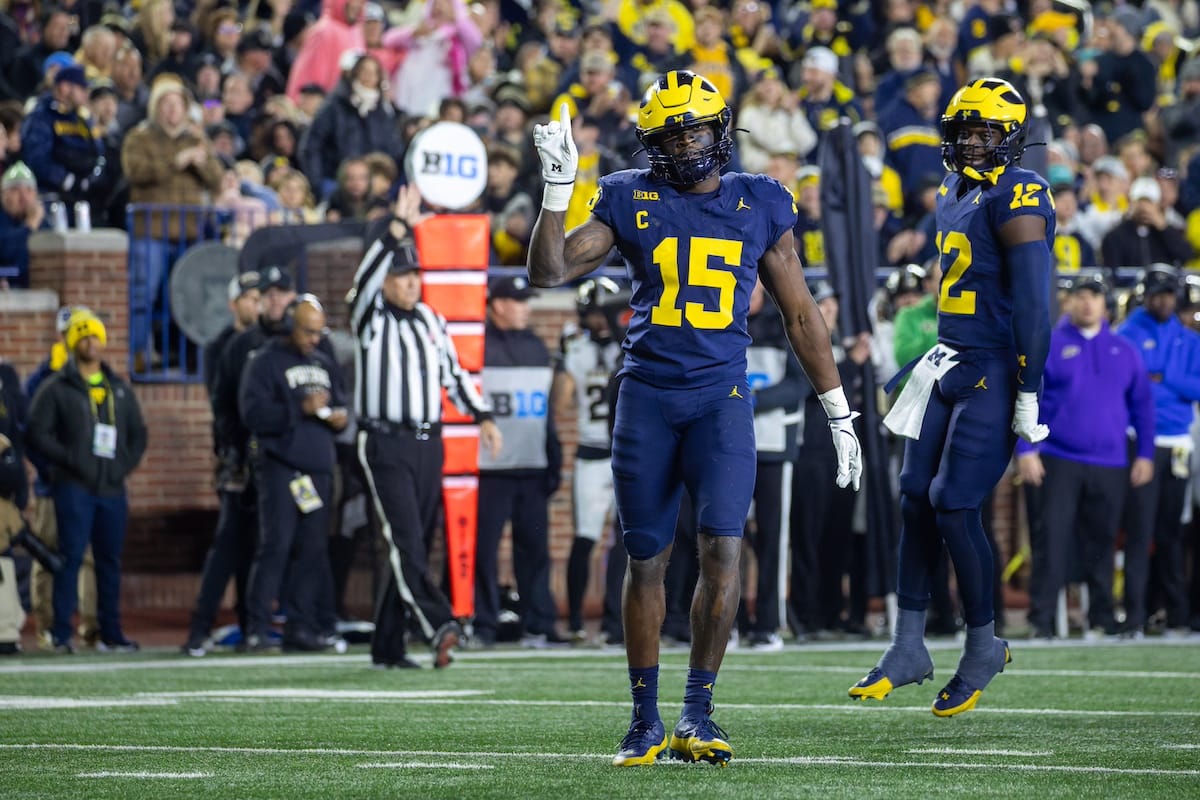
Ann Arbor — It’s worth considering that what Ernest Hausmann did this week took bravery.
Coming back to Ann Arbor and the Michigan football program he walked away from in November 2025 to work out for a pro day, Hausmann explained his absence in a lengthy Sports Illustrated story published on Thursday. In that story, written by Albert Breer, Hausmann and those closest to him recounted what they eventually learned to be a bipolar episode that resulted in the senior linebacker and captain for Michigan quietly slipping away from Michigan, his mental health crisis, and Hausmann’s subsequent efforts to find better health, balance, and a return to football.
Which all brought Hausmann to Friday afternoon, speaking with a gaggle of reporters about the last handful of months, and stepping back through doors that seemed to be closed.
“There's no going around the corner about it,” Hausmann said Friday. “Just me being open about it, just letting the whole world know kind of what's going on. It's very important to me.”
The abridged version of the SI story (which cannot be recommended enough) is that Hausmann suffered from a bipolar episode starting sometime late in the 2025 season, which ultimately resulted in him withdrawing inward and pulling back from football. Born in Uganda and the youngest of 23 children to parents with AIDS then adopted to a family in Nebraska, he had become obsessive about helping his native country, even traveling there amidst the Michigan-Ohio State game, returning shortly after.
Hausmann eventually tried to enlist in the National Guard, driving across the country at night to Oregon after cutting off contact with a number of people in his life, before he crashed his car and was taken to a hospital and treated for minor injuries. A few weeks later, Dr. Victor Hong, a psychiatrist at U of M who had been aware that Hausmann might be in crisis, saw him in Ann Arbor and sought an involuntary mental health check and the linebacker spent a number of days admitted to a mental hospital.
There, he got on mood stabilizers, learned of his diagnosis, and began the process of healing.
“Being in the mental hospital, I learned that here, the University of Michigan has one of the top mental hospitals in the world,” Hausmann, who also credited Dr. Hong for his help, said. “And so I find that a blessing as well, to be able to be placed there.”
As Hausmann got things back on track and began classes for the spring semester, he began to realize he wanted to return to football and pursue his NFL ambitions.
And that meant he’d need to address, in some fashion, what had happened.
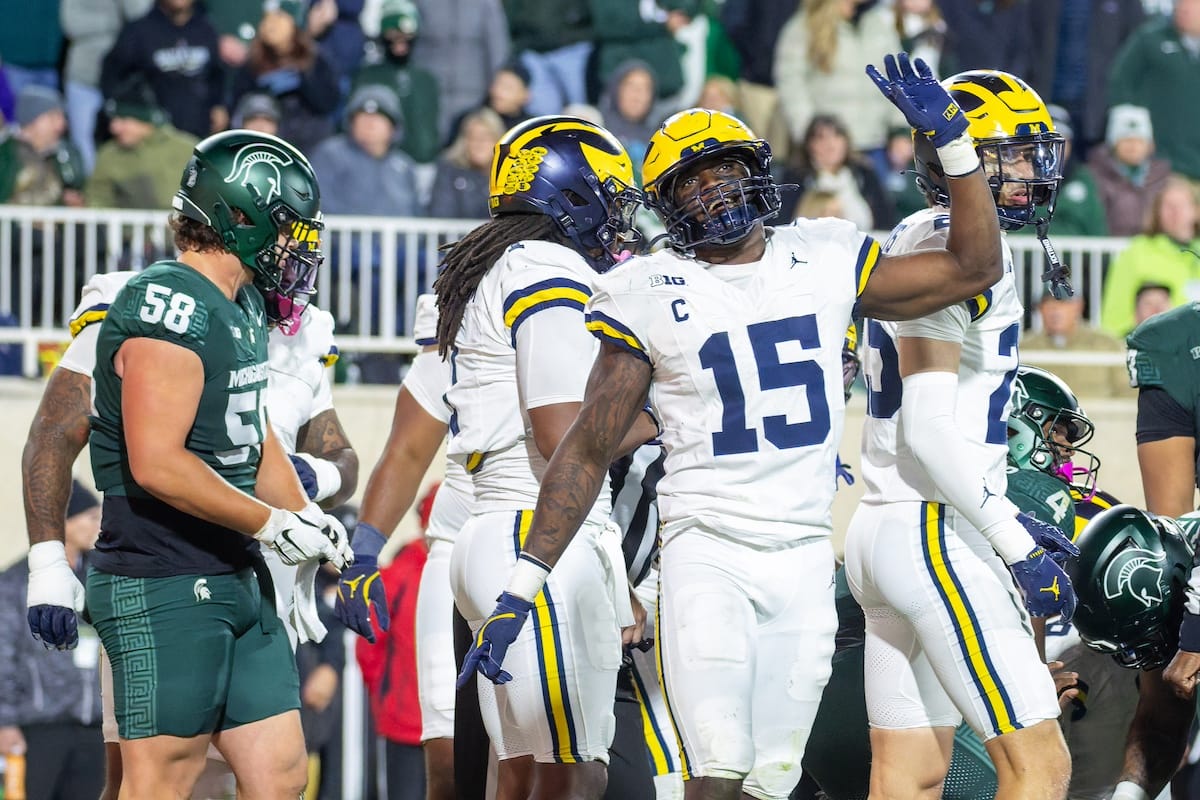
Naturally, NFL teams will want to dig into what happened and Hausmann’s diagnosis. Various media availabilities awaited, and the questions were inevitable. What had happened, to some extent, was going to be revealed. And while there's strategic benefit a tell-all interview, heading off public speculation or leaks from closed-door interviews, the “all” in question, a bipolar diagnosis, carries a heavy stigma.
“I've got no shame telling my story,” Hausmann said. “You know, for me, I just want to help people.”
Hausmann, in the SI story, offered an apology to Michigan fans. Rejoining the teammates he had left in a lurch without explanation, no apologies were necessary, lineman Damon Payne said.
“No apology needed on that aspect,” Payne said of Hausmann’s abrupt departure. “He’s our brother. Anything you need, anything you going through, we’re there for you. No matter what. No opinion, no judgment. We just brothers. That's what we do for each other.”
The presiding concern was for Hausmann’s well being, linebacker Jimmy Rolder said.
Rolder and Payne were among the Wolverines who didn’t know what exactly had happened until this week, and are thankful that Hausmann has gotten the help he needs.
“He's such a great player, great teammate, and, you know, just pray that he was able to get the help, and it seems like he's doing great now,” Rolder said. “It's awesome to see, 'cause we're all rooting for him. He was a great, great player, great teammate, great leader. So I'm just — we're just all glad that he's been doing well.”
Read more from Mitten Football
 Andrew Graham
 Andrew Graham
What comes next for Hausmann is the same as most draft prospects, to an extent. He’ll have to answer plenty of questions for NFL teams about his mental health and bipolar disorder, on top of everything else they might be asking prospects pre-draft. Hausmann is a draftable player on talent alone, but all that transpired over the last few months could scare any number of NFL teams off.
But Hausmann is happy to be pursuing his dream again.
“It's just really a blessing to be able to put the pads on,” Hausmann said. “And I also love hitting people.”
The story of the end of his college career, weighty and uncomfy as it might be, is out there, offering some public resolution. The structure of his life with school and football back at the forefront, is helping his mental state. He hopes to help others by sharing his story, cutting back the stigma associated with bipolar disorder.
And while taking on this issue head on, sharing his story and speaking with reporters, might’ve been something of a necessity to pursue an NFL future, it doesn’t mean Hausmann wasn’t brave to do it.